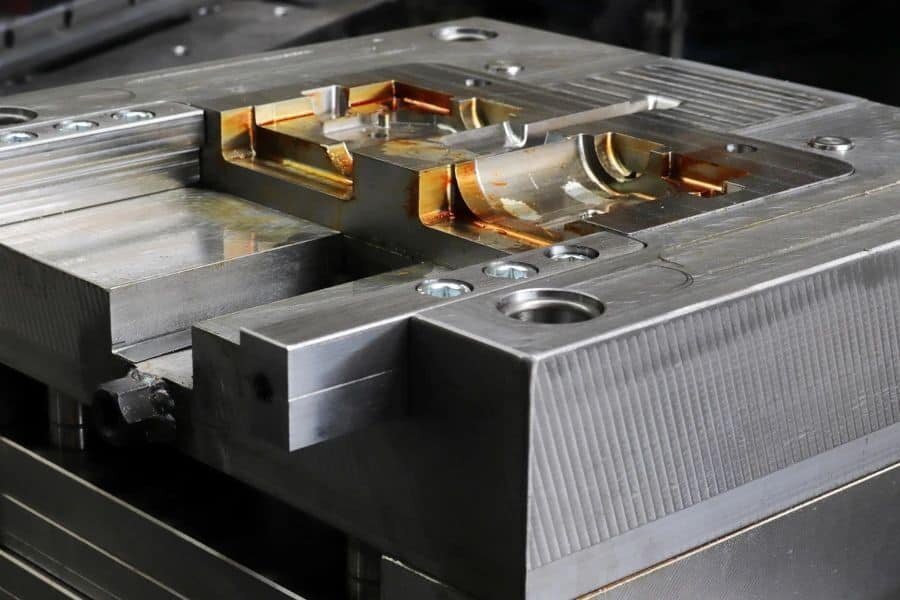
High-quality die casting begins long before molten metal enters the machine. It starts with proper component analysis, accurate mold design, suitable tool steel, and a controlled manufacturing process.
For automotive companies, engineering firms, and industrial buyers, selecting a die casting manufacturer with an in-house tool room can significantly improve product quality, reduce development time, and protect confidential component designs.
An integrated manufacturing setup allows the same company to handle mold design, CNC machining, testing, production, maintenance, and modifications under one roof.
DFM Analysis Before Mold Manufacturing
The first step in reliable die casting production is Design for Manufacturing, or DFM, analysis.
During this stage, engineers review the client’s 2D drawings and 3D CAD models to identify potential manufacturing issues before the mold is produced.
Important areas reviewed during DFM analysis include:
- Wall thickness
- Draft angles
- Parting-line location
- Shot size
- Ejector-pin positions
- Machining allowances
- Component tolerances
Uneven wall thickness can cause shrinkage, distortion, or porosity, while insufficient draft angles may make it difficult to remove the component from the mold.
By correcting these issues early, manufacturers can reduce tooling modifications, production delays, and rejection rates.
High-Grade Tool Steel Machining
Die casting molds are exposed to high temperatures, pressure, and repeated heating and cooling cycles. Therefore, the quality of the tool steel and machining process directly affects mold life and component consistency.
Premium hot-work tool steels, such as H13 or equivalent die steels, are commonly used for mold cavities and critical inserts.
High-speed CNC machining centers are used for roughing and finishing the mold with accurate dimensions and smooth cavity surfaces.
Proper machining helps maintain:
- Dimensional accuracy
- Surface finish
- Mold alignment
- Parting-line precision
- Consistent cavity filling
An in-house tool room also allows engineers and CNC operators to coordinate directly, reducing communication gaps and manufacturing errors.
Gating and Venting Calibration
A well-machined mold can still produce defects if the molten metal does not flow correctly through the cavity.
The gating and runner system controls how metal enters and fills the mold. Engineers carefully design the gates, runners, vents, and overflows to achieve smooth and balanced metal flow.
- Gas porosity
- Cold shuts
- Misruns
- Flow marks
- Incomplete filling
- Surface defects
Proper venting allows trapped air and gases to escape during injection, while overflows help collect oxides and colder metal. Careful calibration of these systems helps reduce turbulence and improve the overall quality of the casting.
Faster Mold Modifications and Maintenance
One of the biggest advantages of in-house mold manufacturing is the ability to make changes quickly.
After the initial mold trial, engineers may need to adjust gate sizes, vent locations, ejector pins, cooling channels, or component dimensions. When the tool room and die casting facility are located together, these modifications can be completed without sending the mold to an external supplier.
Regular mold maintenance can be performed immediately, including:
- Cleaning cavities and vents
- Replacing worn inserts
- Repairing damaged areas
- Servicing ejector systems
- Correcting flash-producing sections
- Refurbishing cooling channels
This reduces machine downtime and avoids delays caused by third-party transportation and coordination.
Why In-House Tooling Matters to Procurement Teams
Procurement teams must consider more than the initial tooling price. Tool life, maintenance response, production consistency, lead time, and supplier accountability are equally important.
When the mold maker and foundry are separate, quality issues can lead to delays and disagreements over responsibility.
This single-source process creates clearer accountability and allows production problems to be resolved faster.
Protecting Component Confidentiality
Confidentiality is especially important for automotive, defence, and custom industrial components.
When design files are shared with several external suppliers, the risk of unauthorized access increases. An integrated tool room keeps the client’s drawings, CAD models, mold designs, and production information within one controlled manufacturing facility.
Supporting Consistent Bulk Production
Bulk die casting production requires consistent quality across thousands of components.
In-house mold design helps reduce common casting defects, including:
- Gas porosity
- Shrinkage
- Excessive flash
- Cold shuts
- Dimensional variation
- Surface defects
- Premature mold wear
Although no manufacturing process can eliminate every possible defect, proper mold engineering and process control can significantly improve production stability and reduce rejection rates.